ALEXSOFT

From constraints to architecture, and architecture to working systems.

Projects in which founder Yongmin Lee designed around standards, certification requirements and the boundaries of existing systems, then led development through operational handover. Roles and outcomes are stated in verifiable terms, with actual screens of products and services conceived and built directly.

Philippine BIR Electronic Invoicing and Sales Reporting System

A national system built through KOICA grant aid from 2018 to 2022 to establish the foundation for mandatory e-invoicing at the Philippine Bureau of Internal Revenue. Yongmin Lee participated as development project lead from 2020 to 2022.

Context
National e-invoicing mandate
Project period
2018–2022BIR · Initial KOICA grant-aid project
Role
Development project lead · Participation: 2020–2022
Standards
e-invoice document standards · Security standards for documents and their exchange
Status
In operationLaunched in July 2022
Project scope
Initial system development, 2018–2022 · Yongmin Lee’s architecture and development experienceThe 2025–2026 second follow-up support project was undertaken by a different provider
Business system ERP · POS · Accounting Standard document e-invoice schema Sign · Transmit Signature · Secure channel Receive · Validate BIR EIS Query · Audit Convert Validate TLS Receipt results and error codes return to the business system for retries and audit trails Design scope — document standards · exchange security standards · development architecture

← Scroll sideways to see the full structure →

ROLE

Development project lead

Designed the development architecture, e-invoice document standards, and security standards for documents and their exchange, and led development from 2020 to 2022.

CONSTRAINTS

Standards everyone can follow

The design accounted for national-scale processing, document and transmission standards that many businesses must interpret consistently, and the handover of operations to a government organization after delivery.

RESULT

Launched in July 2022

Launched for 100 large taxpayers and remains in operation at eis.bir.gov.ph.

Meeting an e-invoicing mandate requires more than connecting one API. Document semantics, validation and security, failure handling, audit trails and operational handover must work within one architecture so that multiple businesses and systems can operate together.

For organizations facing the same questions

About e-invoicing ↗

The first cloud product among EMR-certified clinic EMRs

Built a cloud EMR product for real use in clinics as part of a new healthcare business.

Context
A major Korean ERP company’s entry into healthcare
Project period
2022–2026
Role
Development lead → Head of development and product planning and designDevelopment lead in 2022; overall responsibility from 2023 through 2026
Constraints
Medical law · Claims · Personal data · EMR certification
Status
A cloud product that passed EMR certification
Clinical care CLINICAL Claims CLAIMS Certification CERTIFICATION Medical law · Privacy Certification criteria Cloud EMR product Product architecture · Operations Use in clinics

← Scroll sideways to see the full structure →

CONSTRAINTS

Medical law, claims, personal data and EMR certification

Legislation, claims workflows, sensitive-data handling and certification criteria directly shaped the product architecture and operations alongside functional requirements.

ROLE

Development lead → Head of development and product planning and design from 2023

Joined as development lead in 2022 and headed development and product planning and design from 2023 through 2026. A background in hospital information systems connected product decisions with the realities of clinical work.

RESULT

A cloud product that passed EMR certification

Completed the first cloud product among EMR-certified clinic EMRs.

Explore healthcare systems design and integration ↗

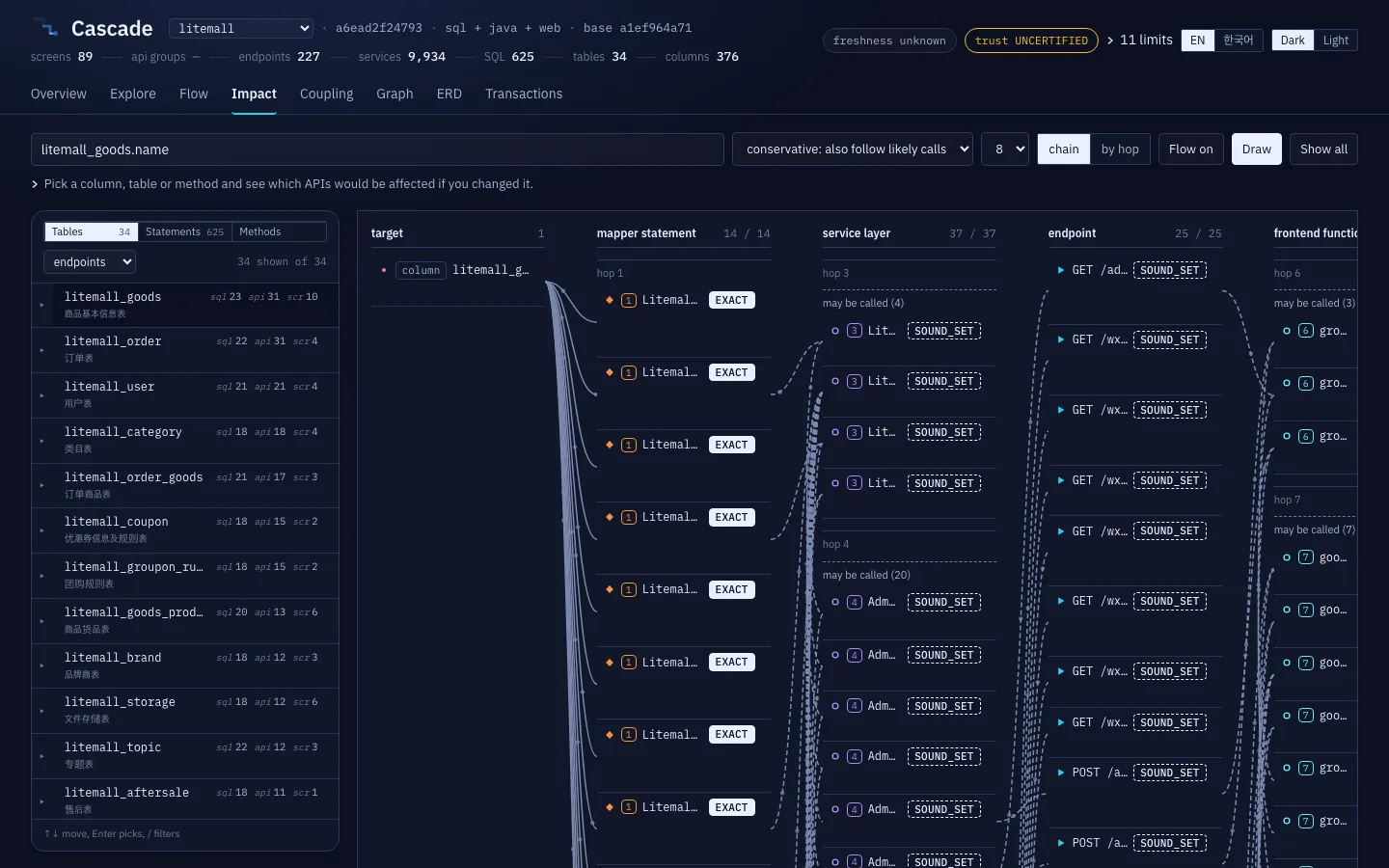
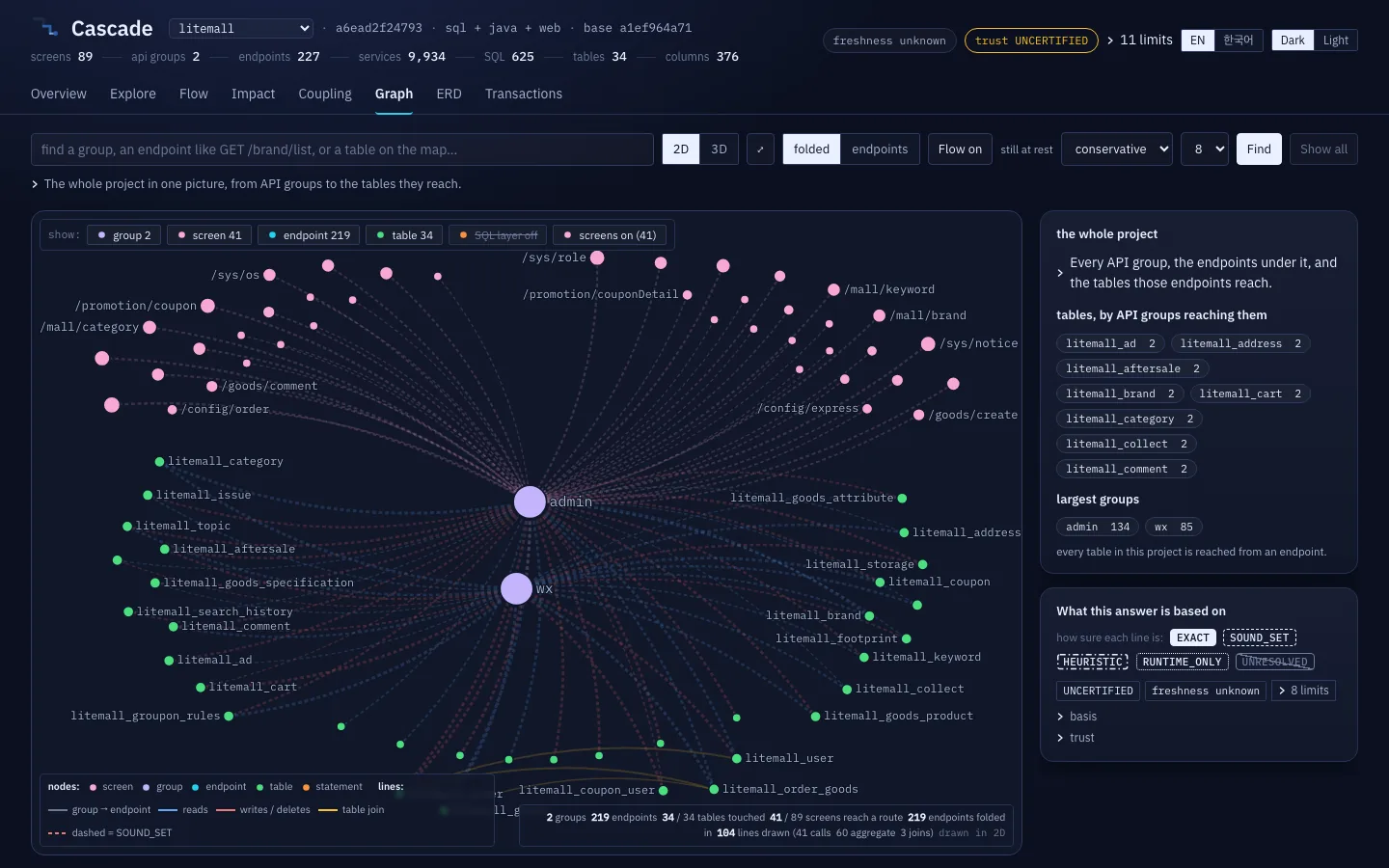
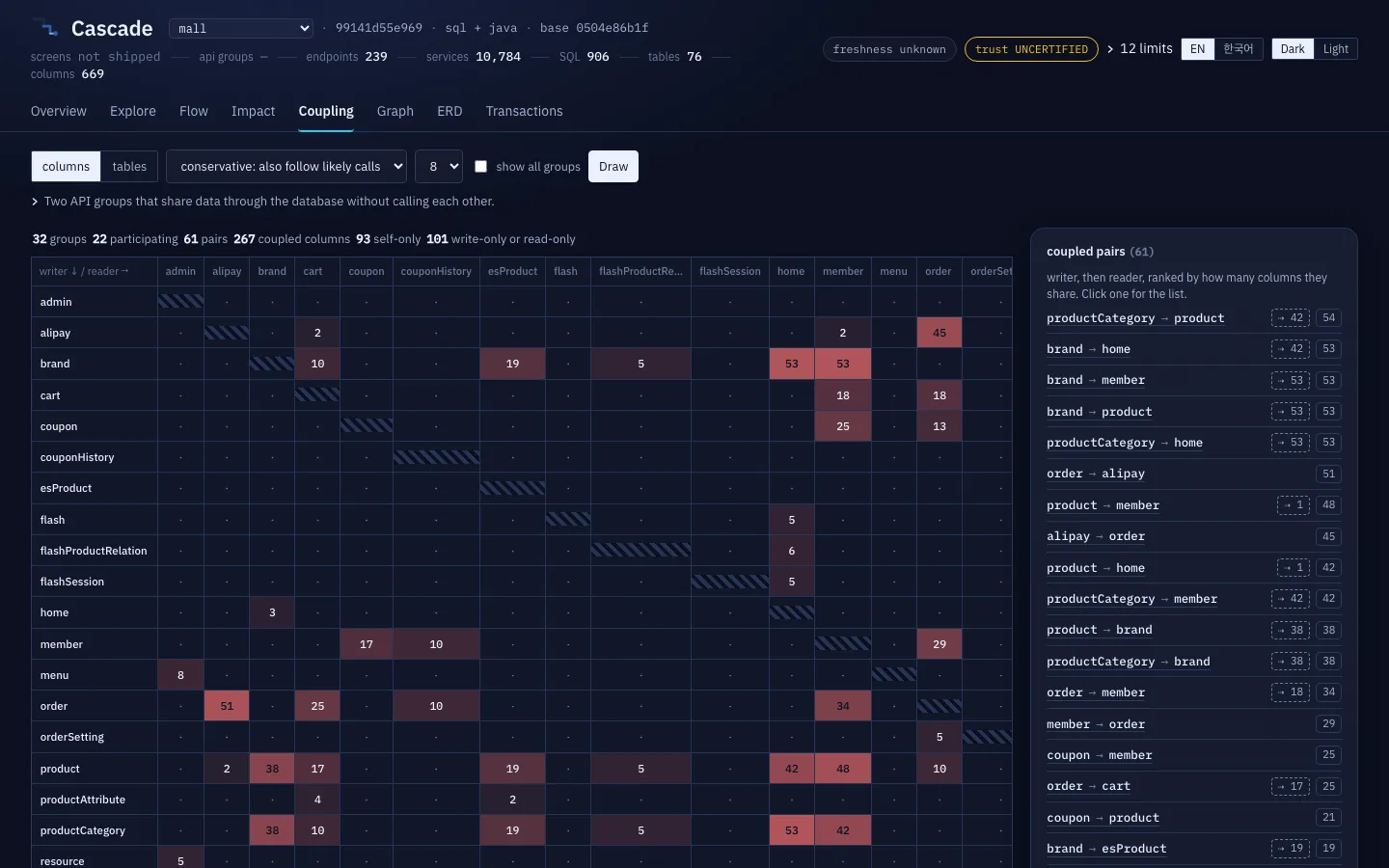
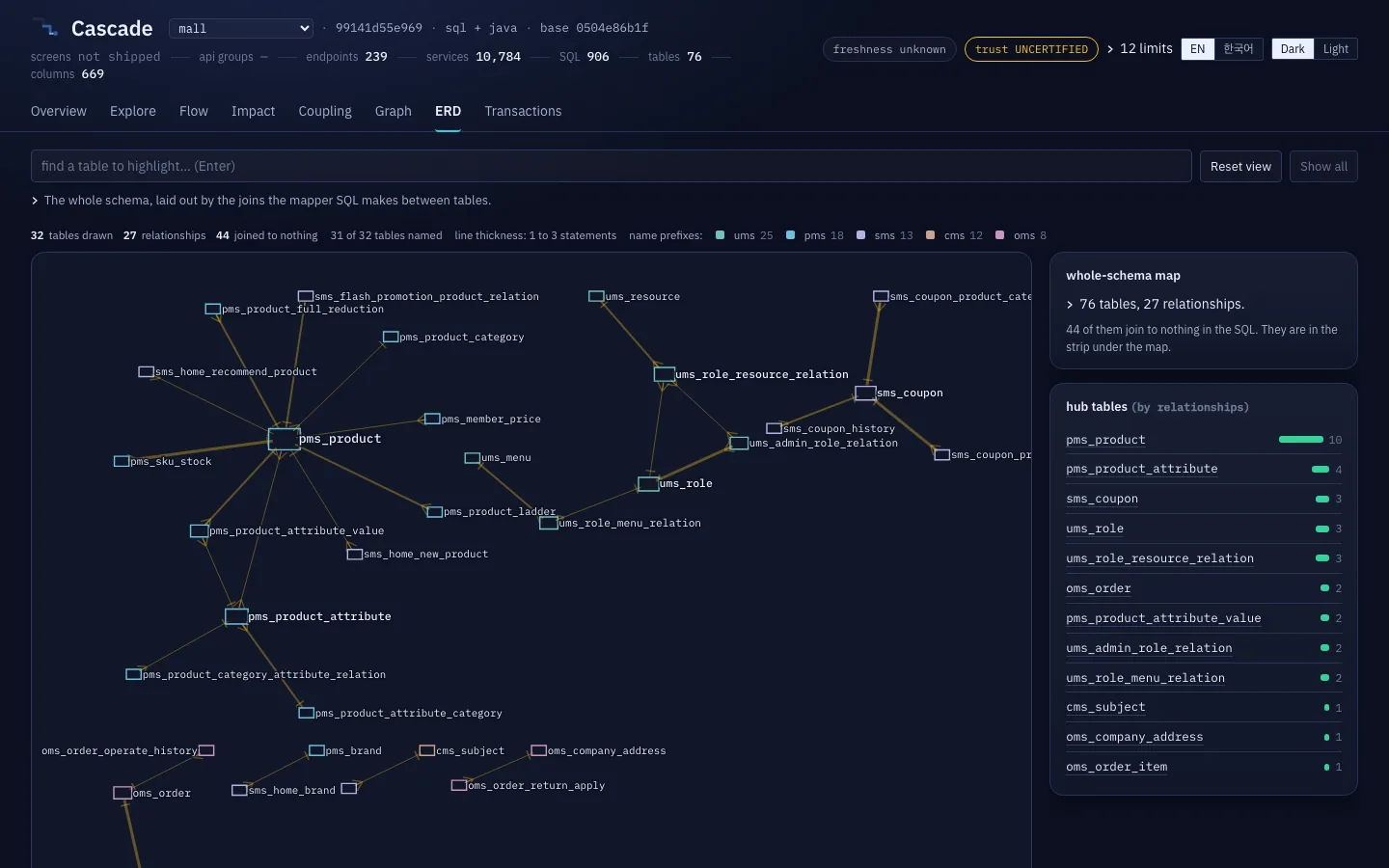
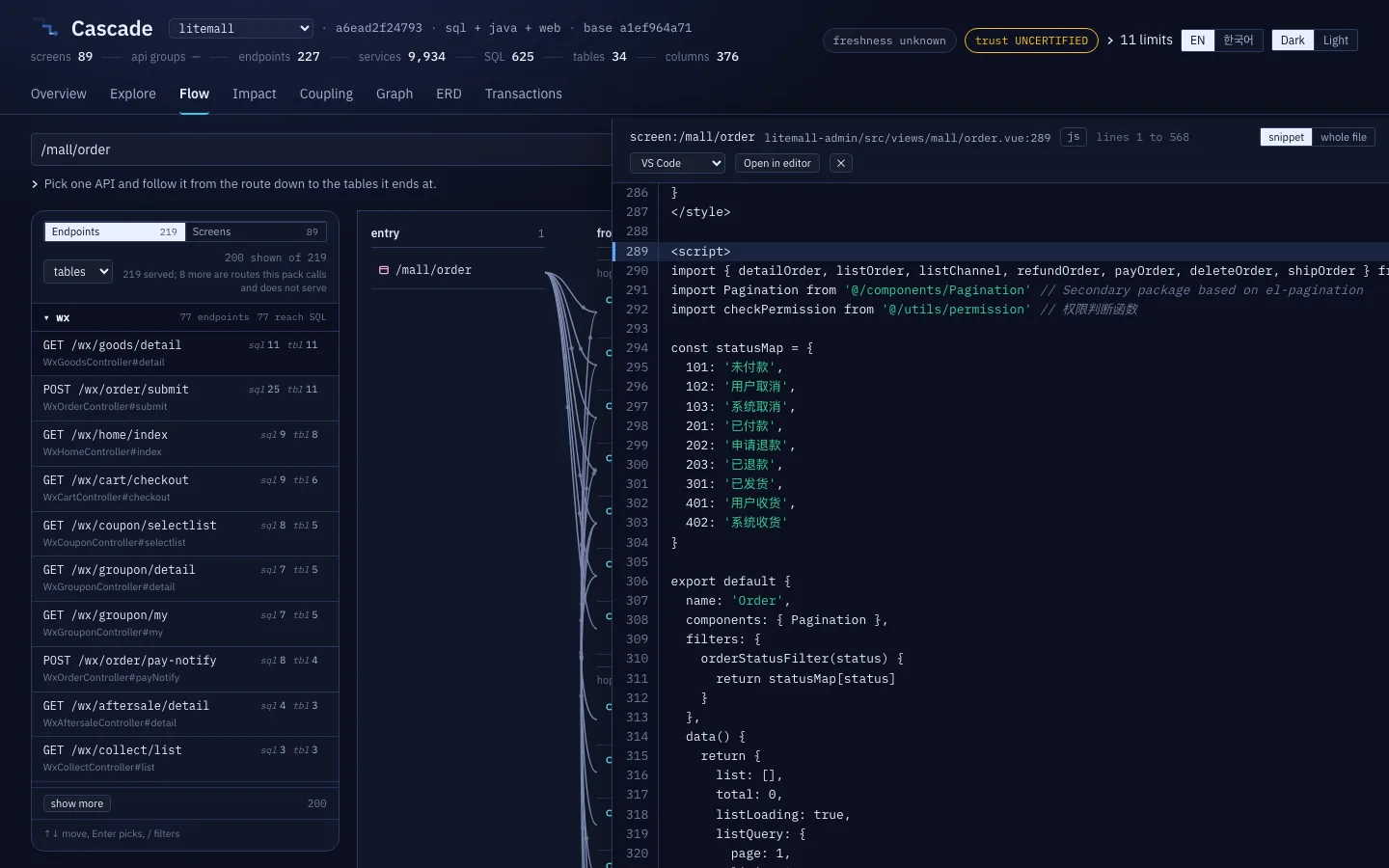
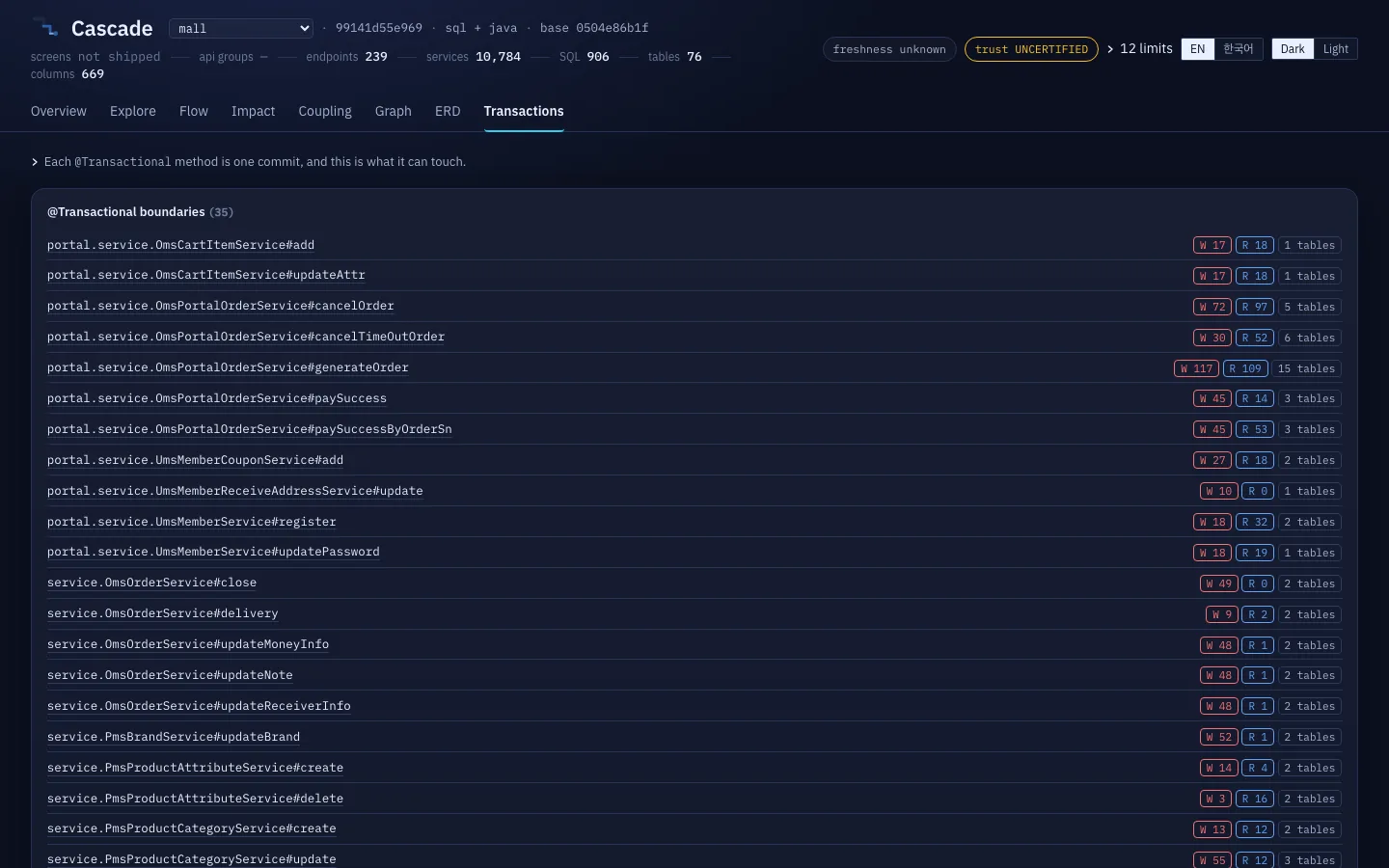
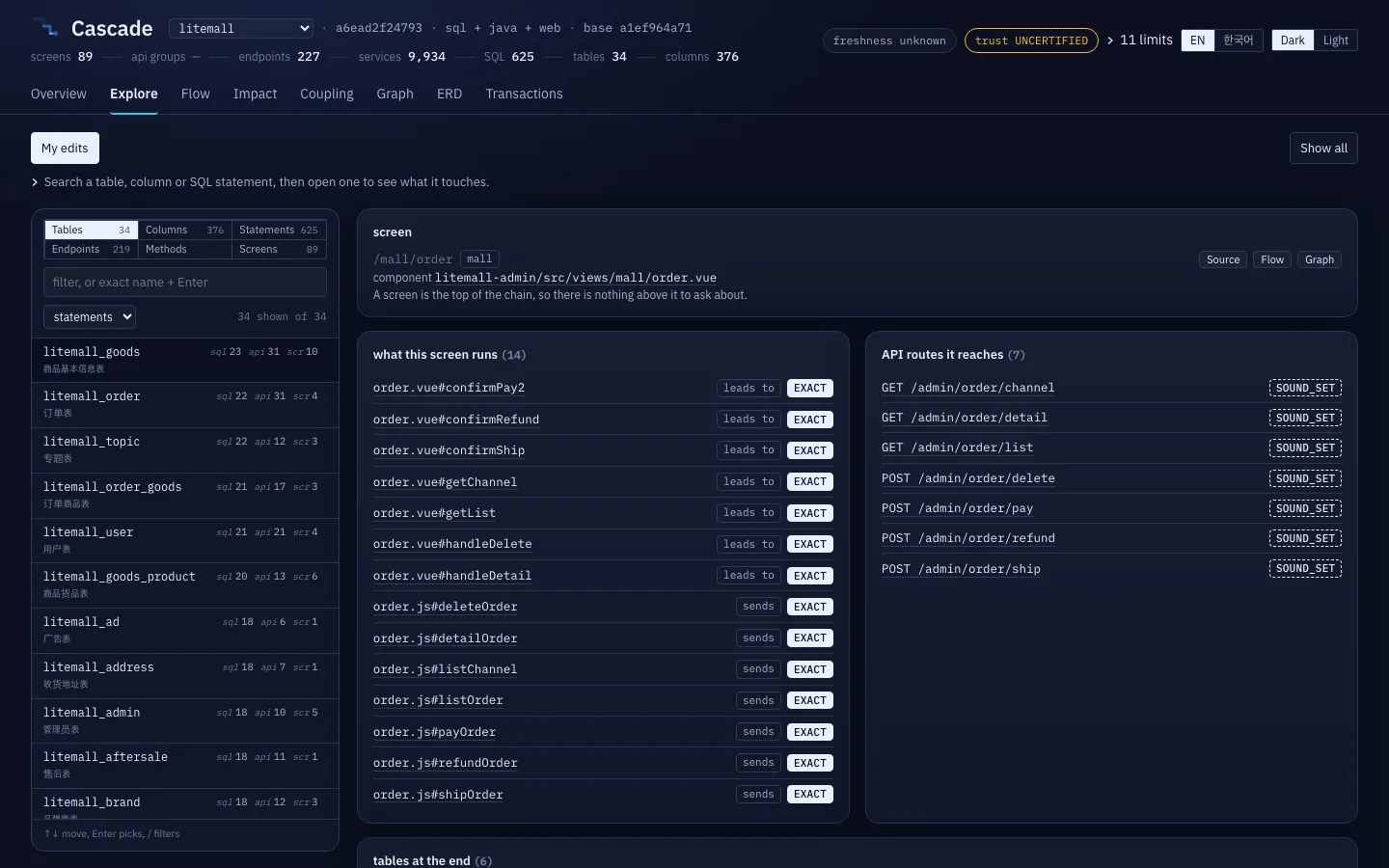
Cascade — an engine that reads code and maps screens to database columns

“If this column changes, which SQL statements, service methods, APIs and screens are affected?” ALEXSOFT designed and built a static-analysis engine to answer a question that often has no precise answer in older systems, using source code alone, and released it under Apache-2.0. The same answers appear in a viewer for people and an MCP server that AI coding agents can query directly.
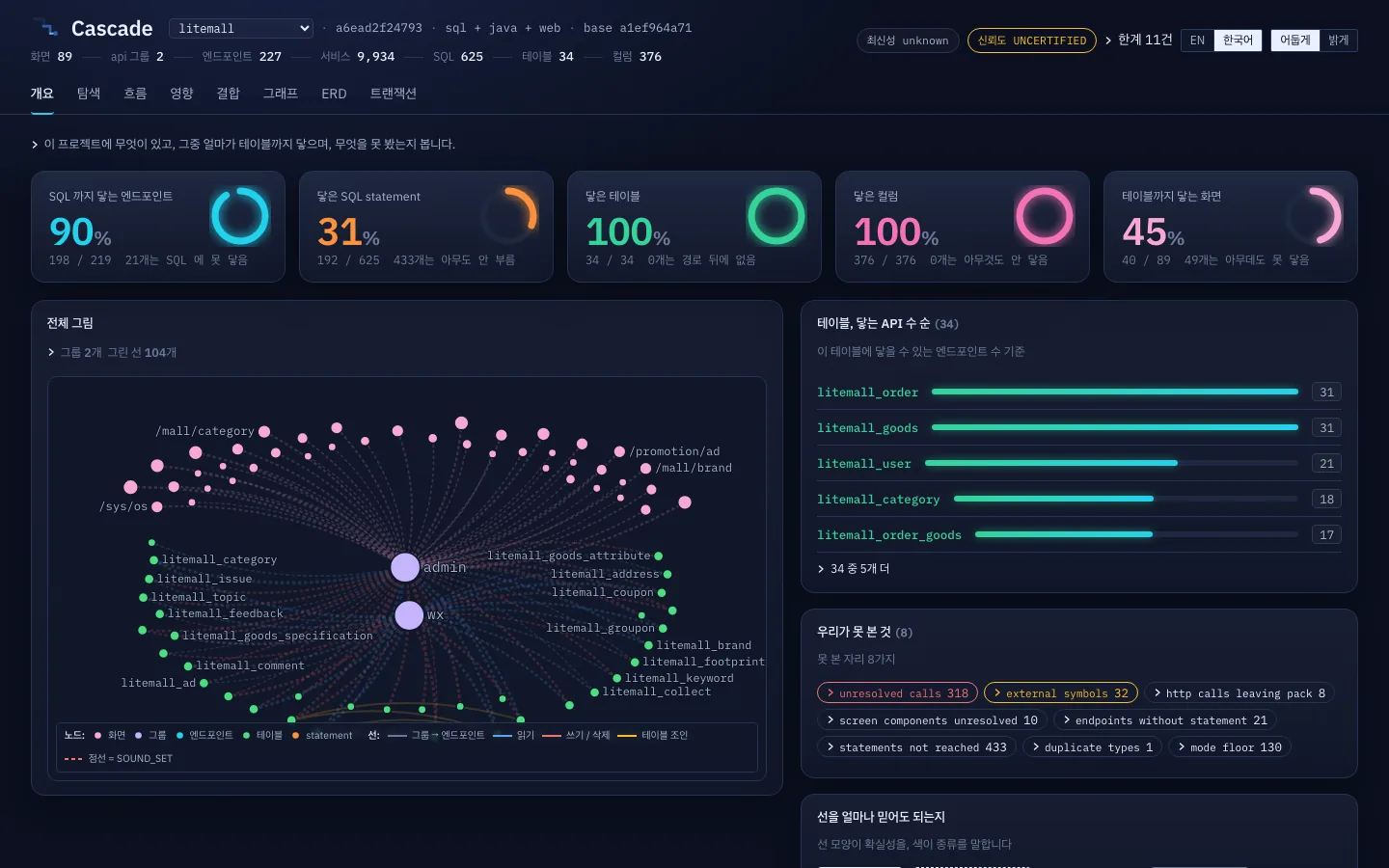
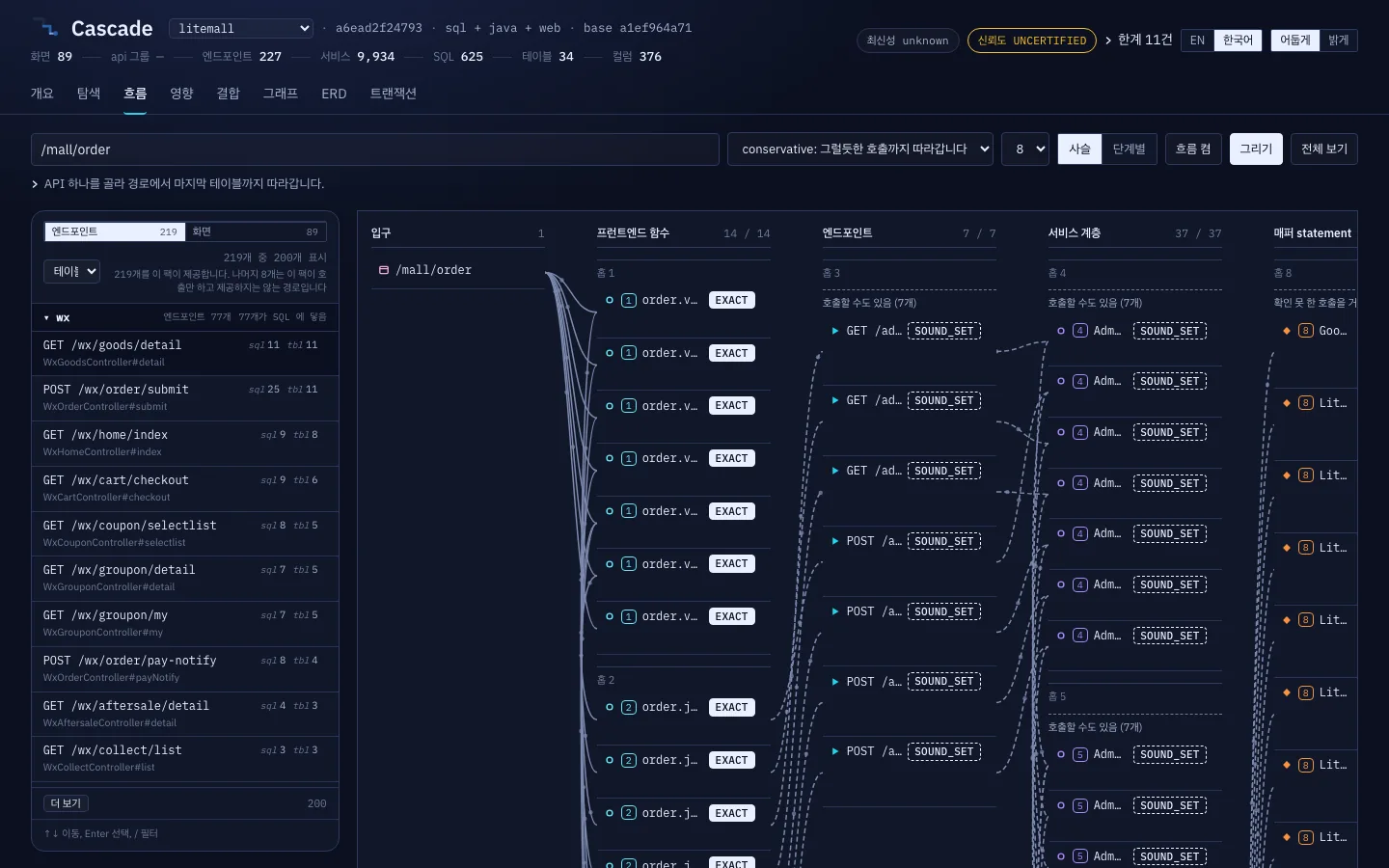
DEMO — from the overview to the impact of one column (retail_price), the actual SQL behind a statement, and then the whole-project graph and an ERD. A 22-second view of actual analysis of the open-source shopping-mall projects litemall and mall.
Type
Open-source static-analysis engine · Local viewer · MCP serverPublished under Apache-2.0 · github.com/alexsoft-hq/Cascade
Questions answered
Column → SQL → Method → API → Screen: impact in both directionsFrom a column you plan to change to the screens it affects; from a screen you plan to open to the columns it reaches
Supported stack
Java Spring MVC · MyBatis (XML, annotations, Plus) · JPA/Spring Data · SQL DDL (MySQL, PostgreSQL, Oracle, H2) · JS/TS, Vue and React routers · OpenAPI · HARKotlin, GraphQL and connections resolved only at runtime are explicitly identified as unsupported
Principle
No claims beyond what the analysis provesVerified and inferred connections are marked separately; anything the analysis could not see is stated explicitly
Deployment
Runs entirely on your own computerSource code and analysis results stay local · Database connections read only table and column names, never the data
WHY

Change impact lived in people’s memories

Finding which screens will break when a column changes can take days. As AI coding agents increasingly make code changes, machines need to answer that question before editing.

HOW

Verified and inferred connections are shown separately

Connections that source code alone cannot establish are marked as unseen. The viewer for people and the answers sent to AI agents come from the same engine, keeping both consistent.

SO WHAT

Reconstruct legacy impact from the source

Finding how far a change reaches is often the longest part of legacy modernization and integration design. The same approach can map your systems.

Being explicit about what static analysis cannot answer makes the answers it can provide trustworthy.

Cascade design principle

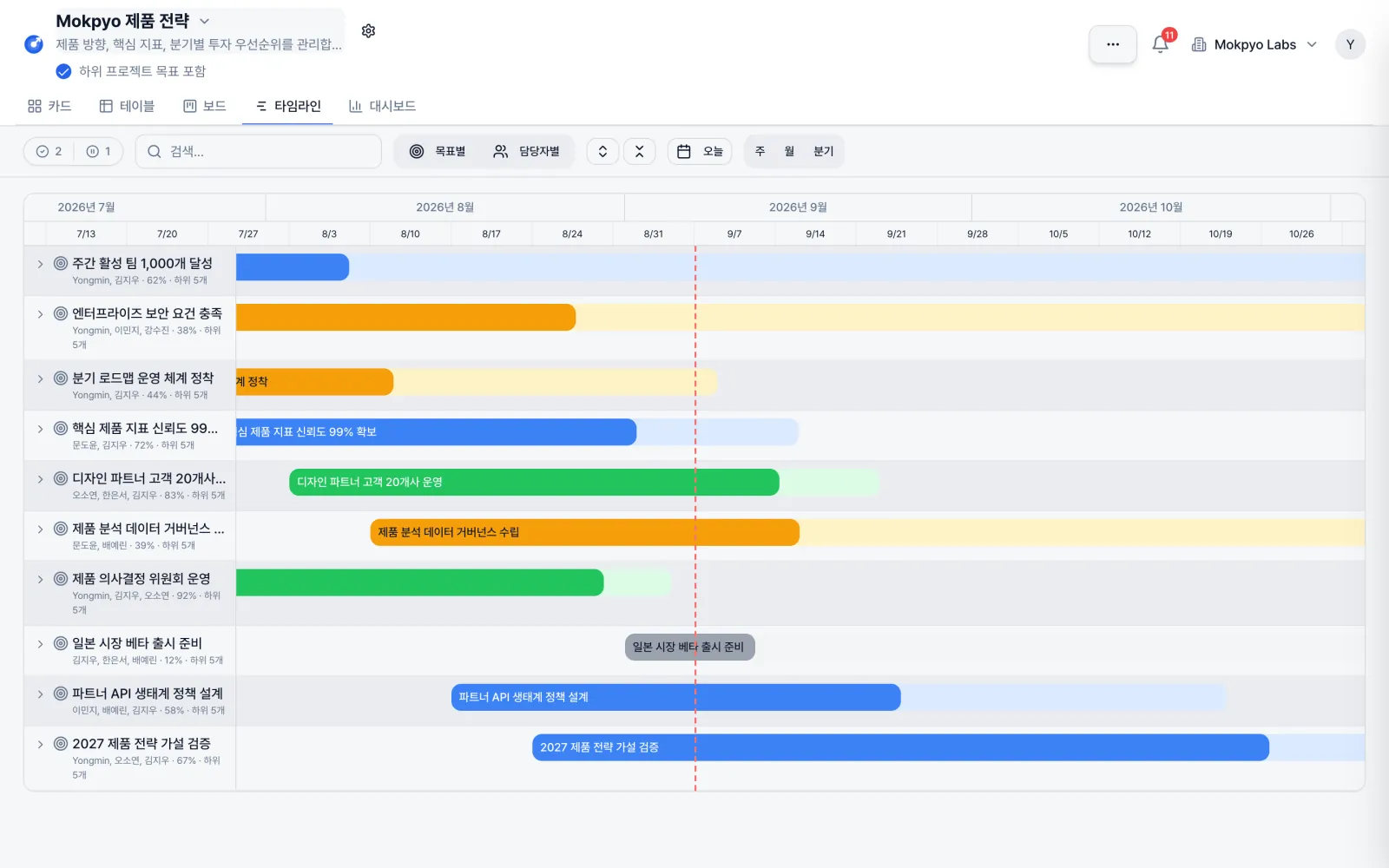
Mokpyo — open source for shared team goals and progress

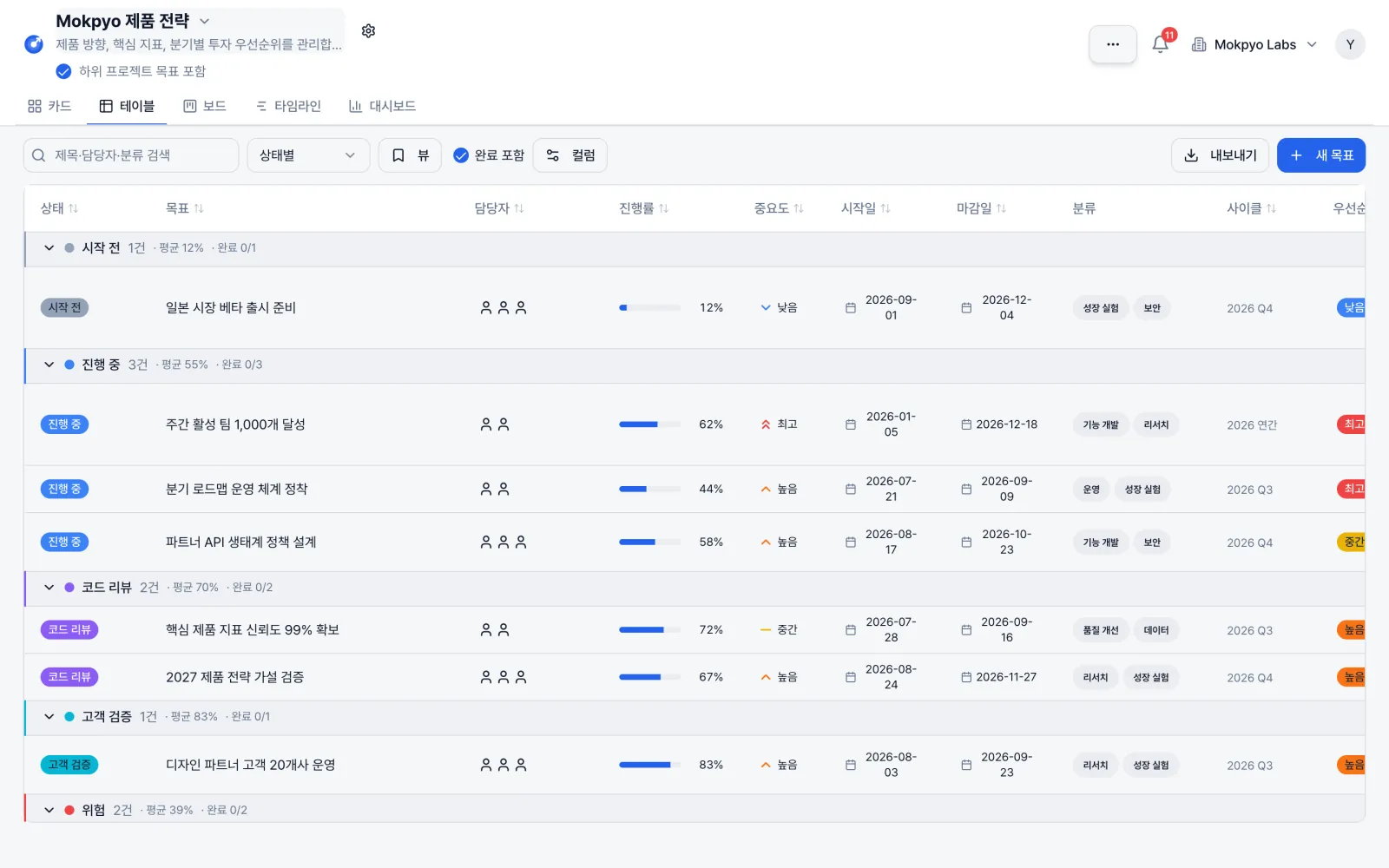
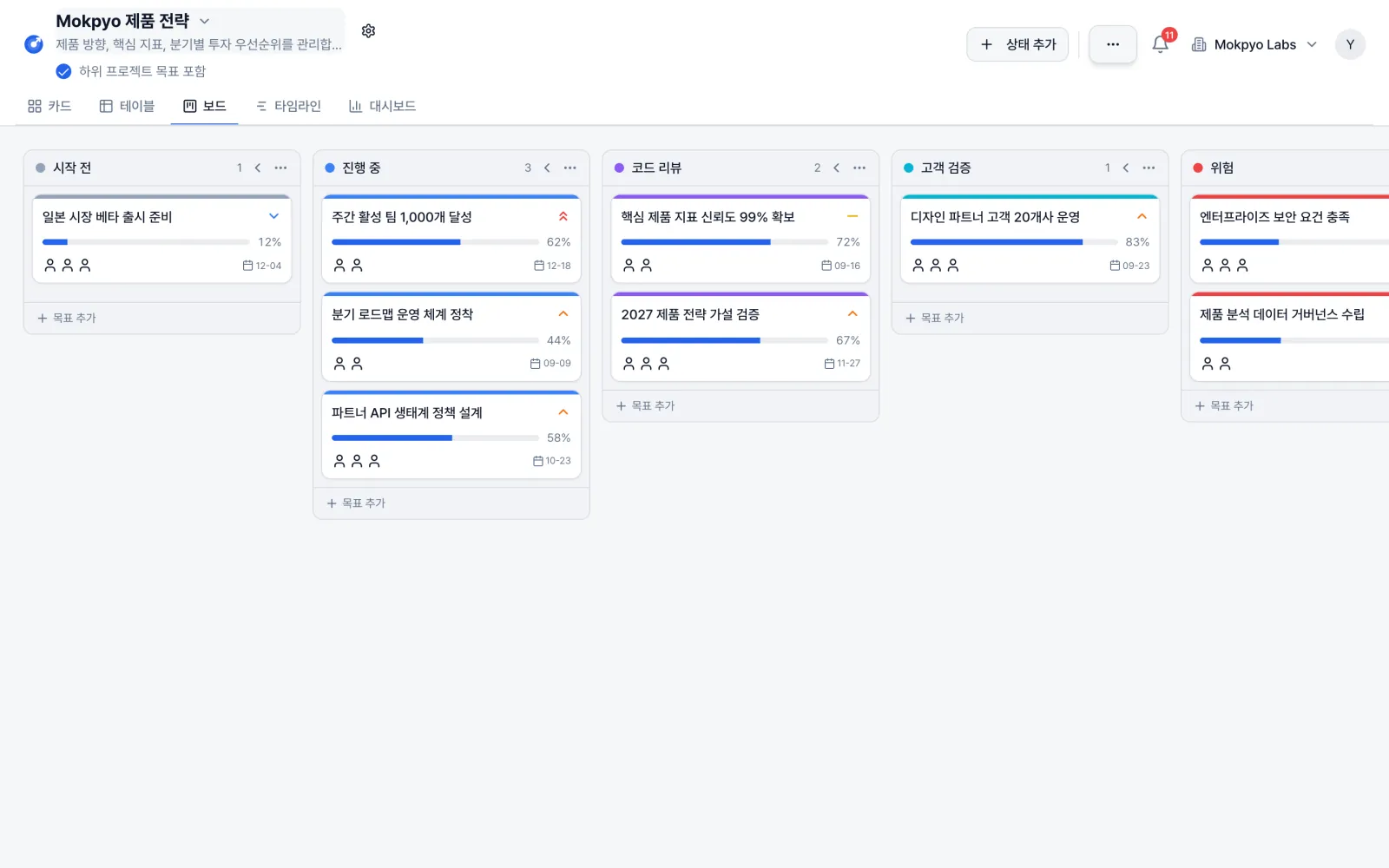
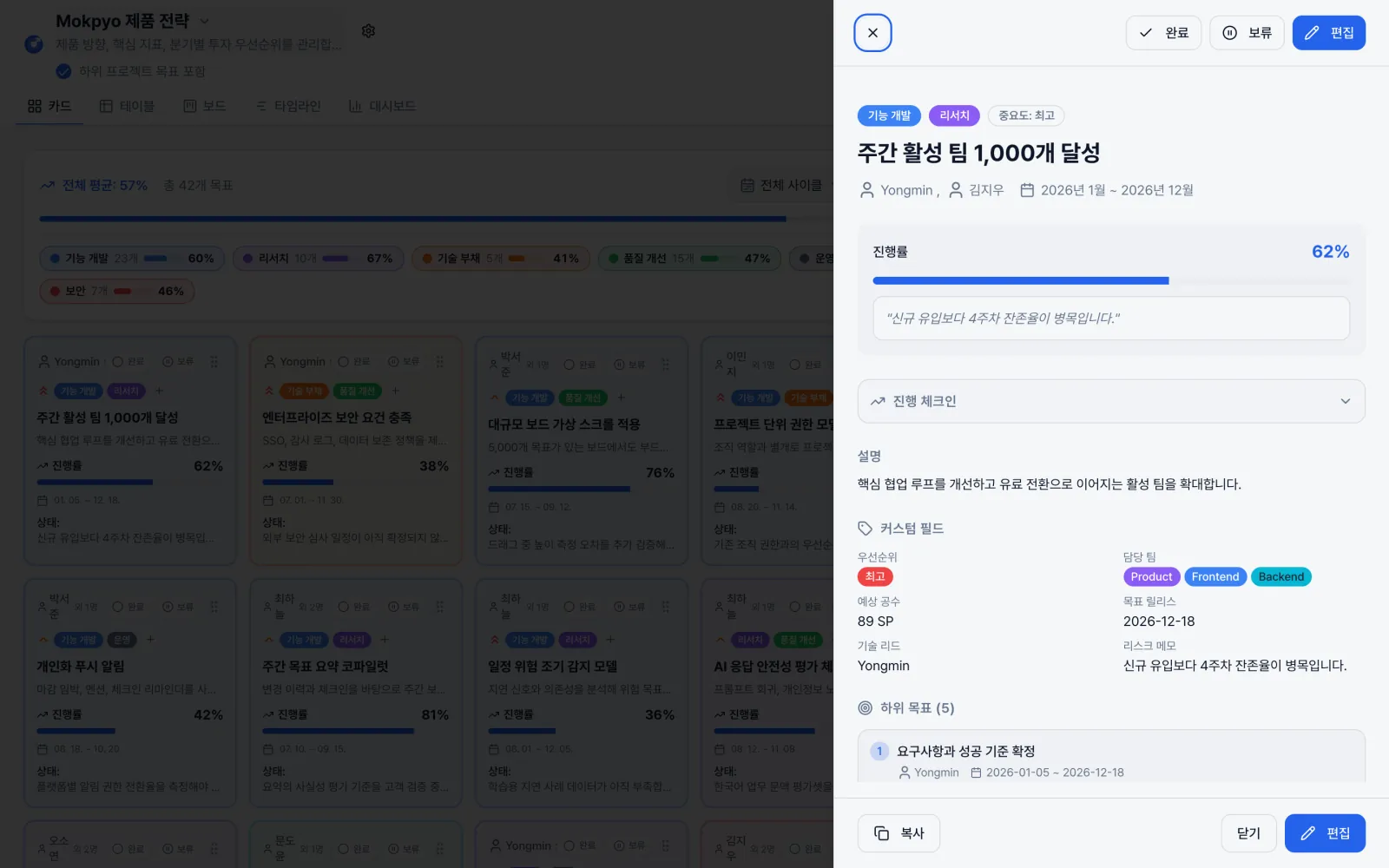
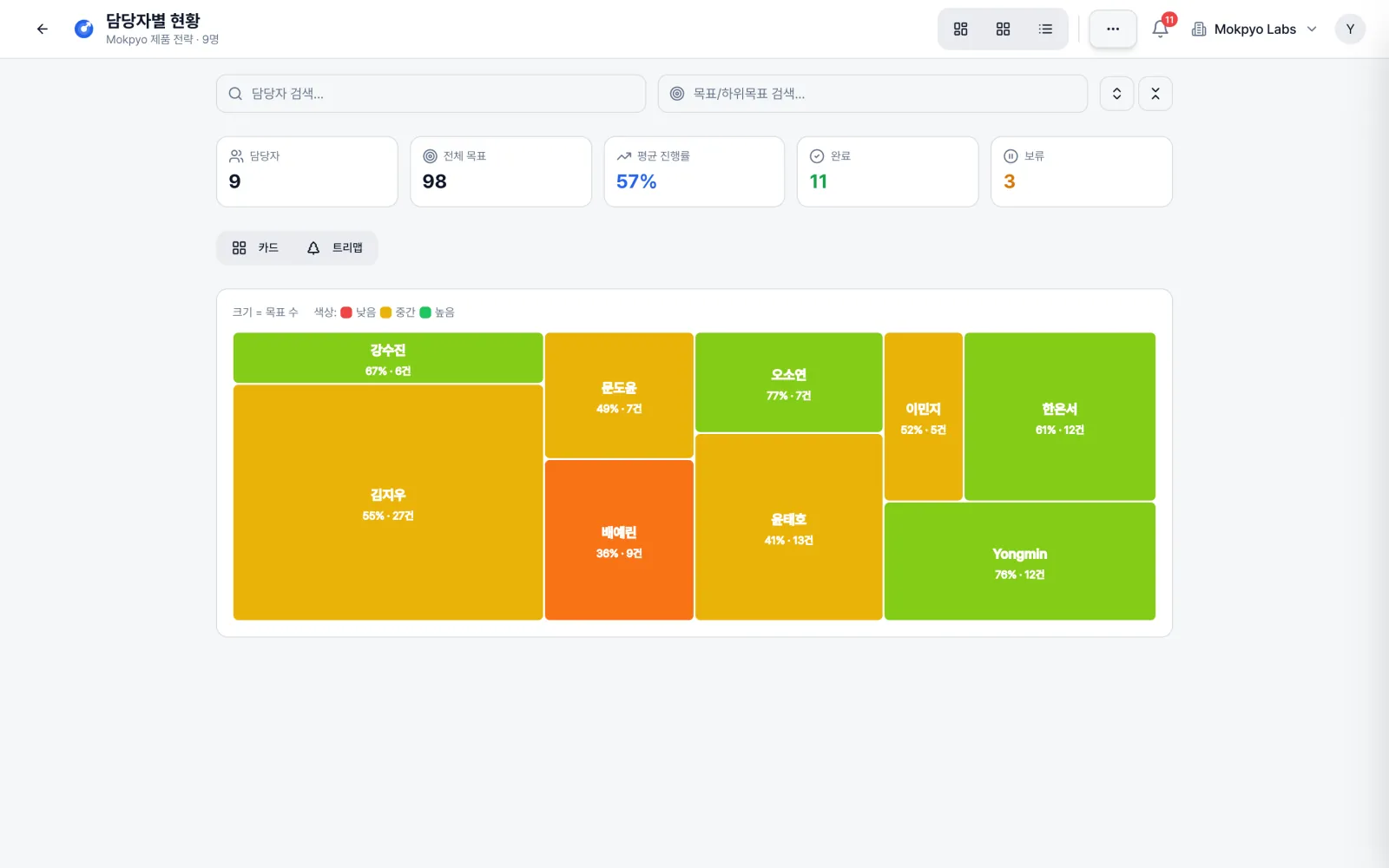
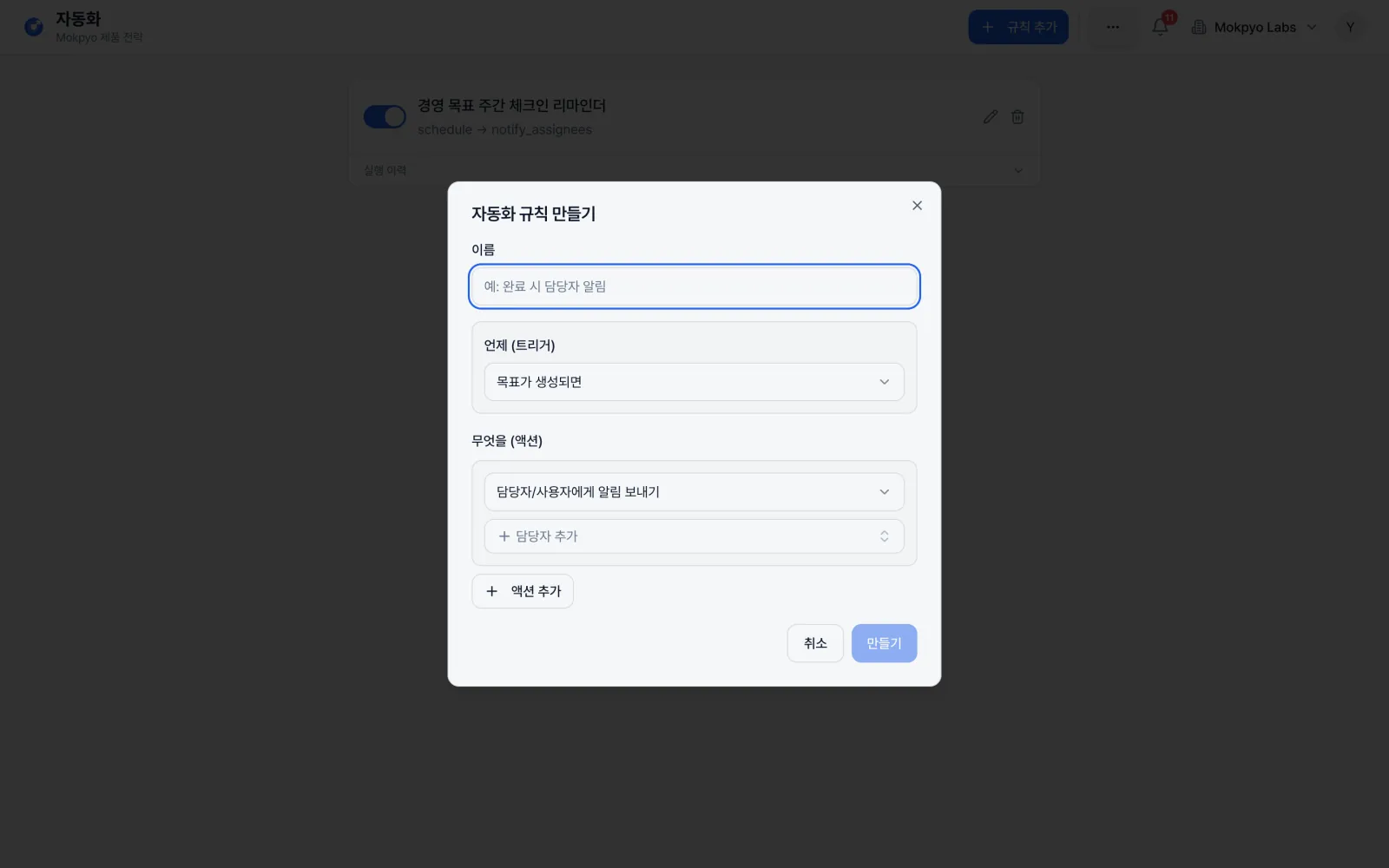
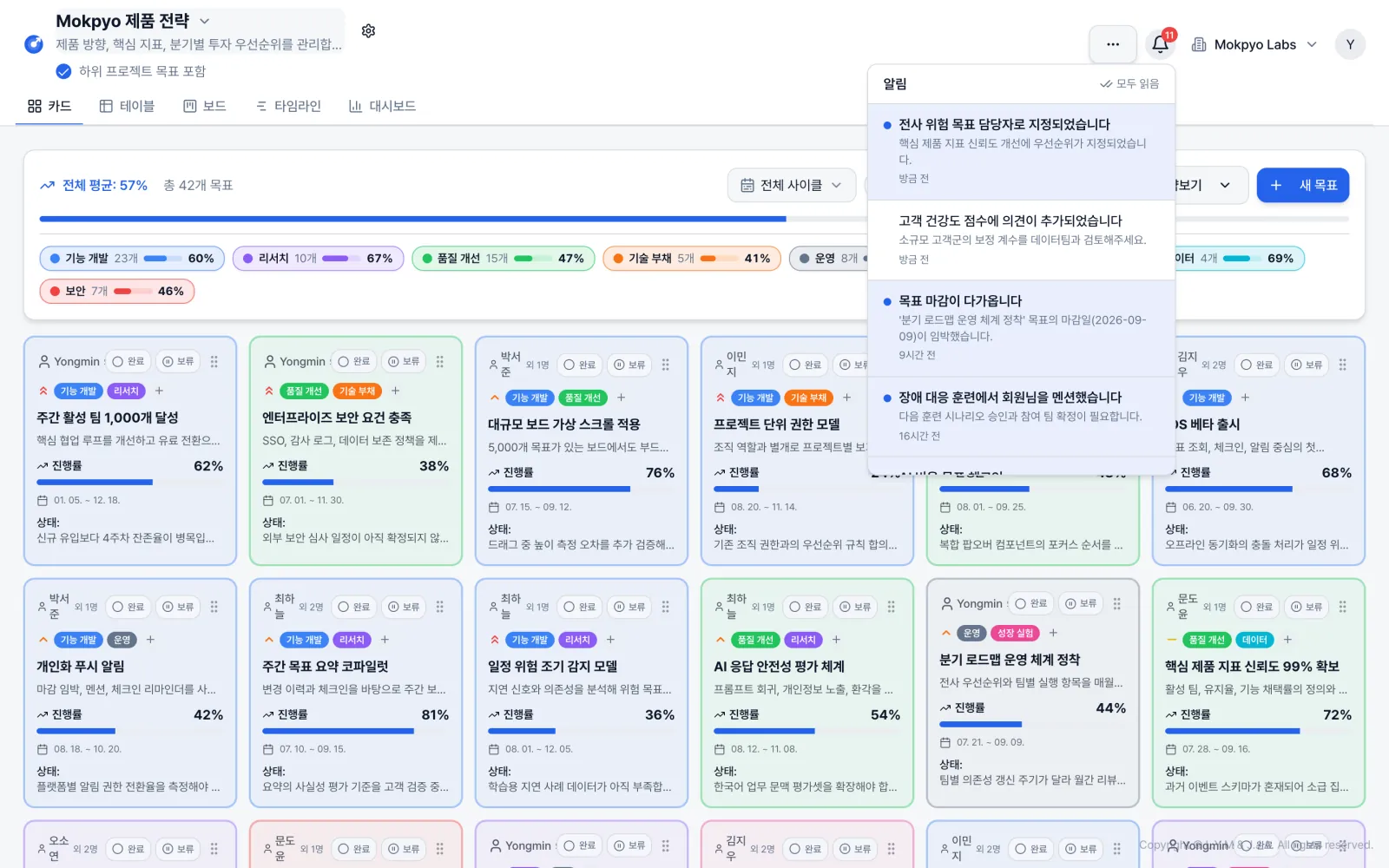
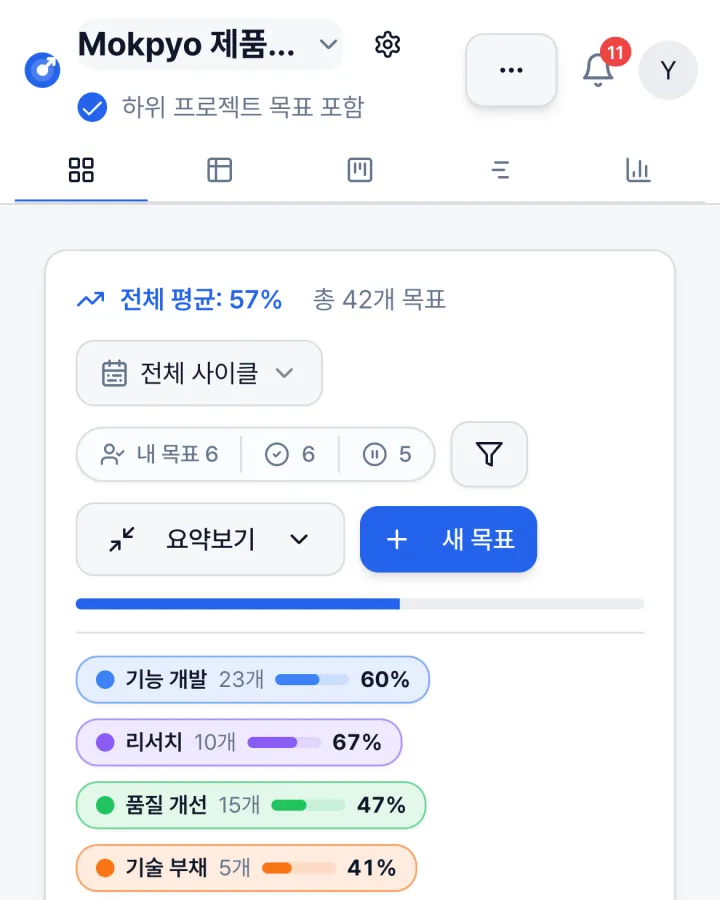
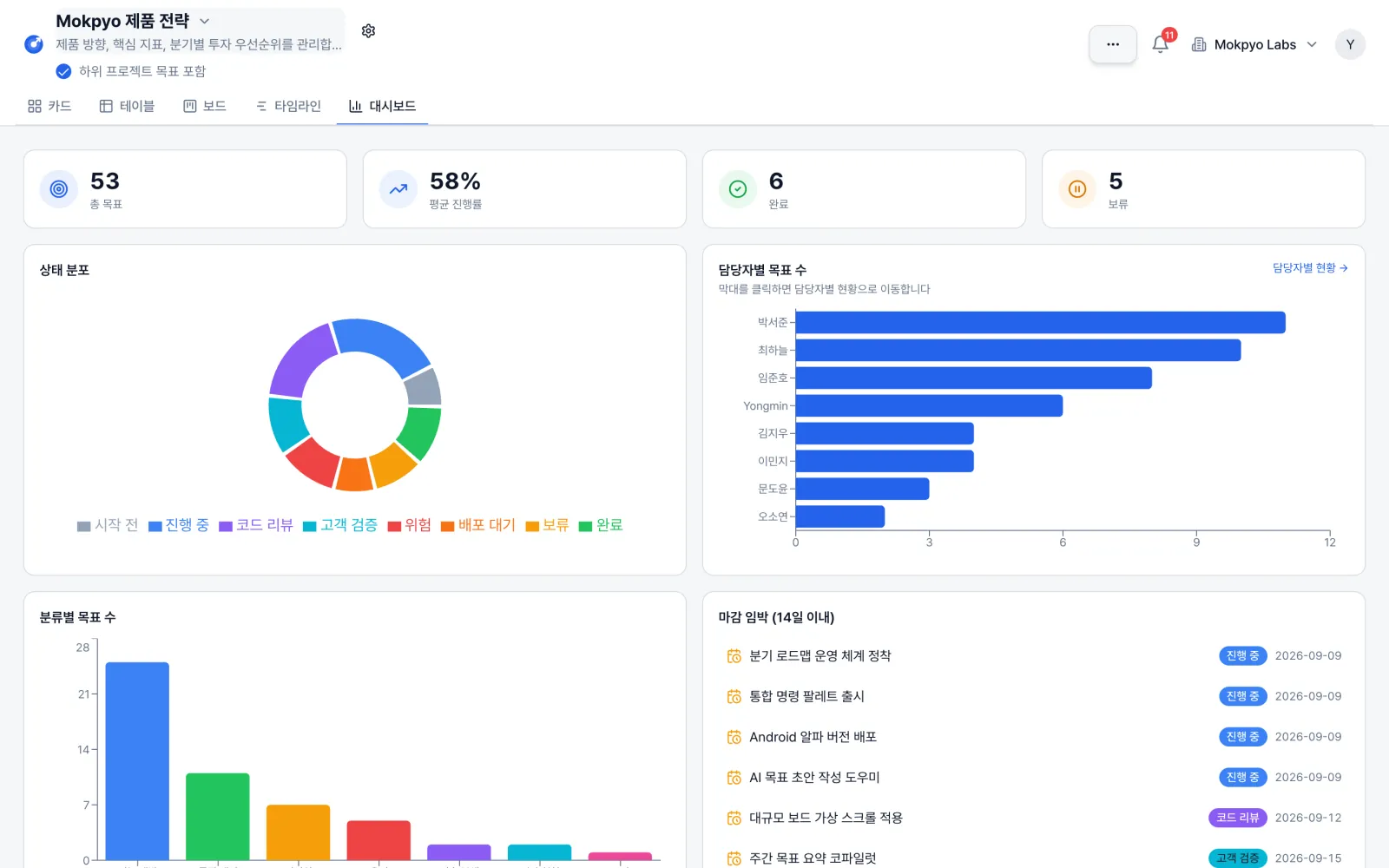
See goals, owners and sub-goal progress together as cards, tables, boards, timelines and dashboards. Install Mokpyo on one team server and share the same browser address. The screens below show an earlier demo workspace with fictional teams and goals; the current interface may differ.
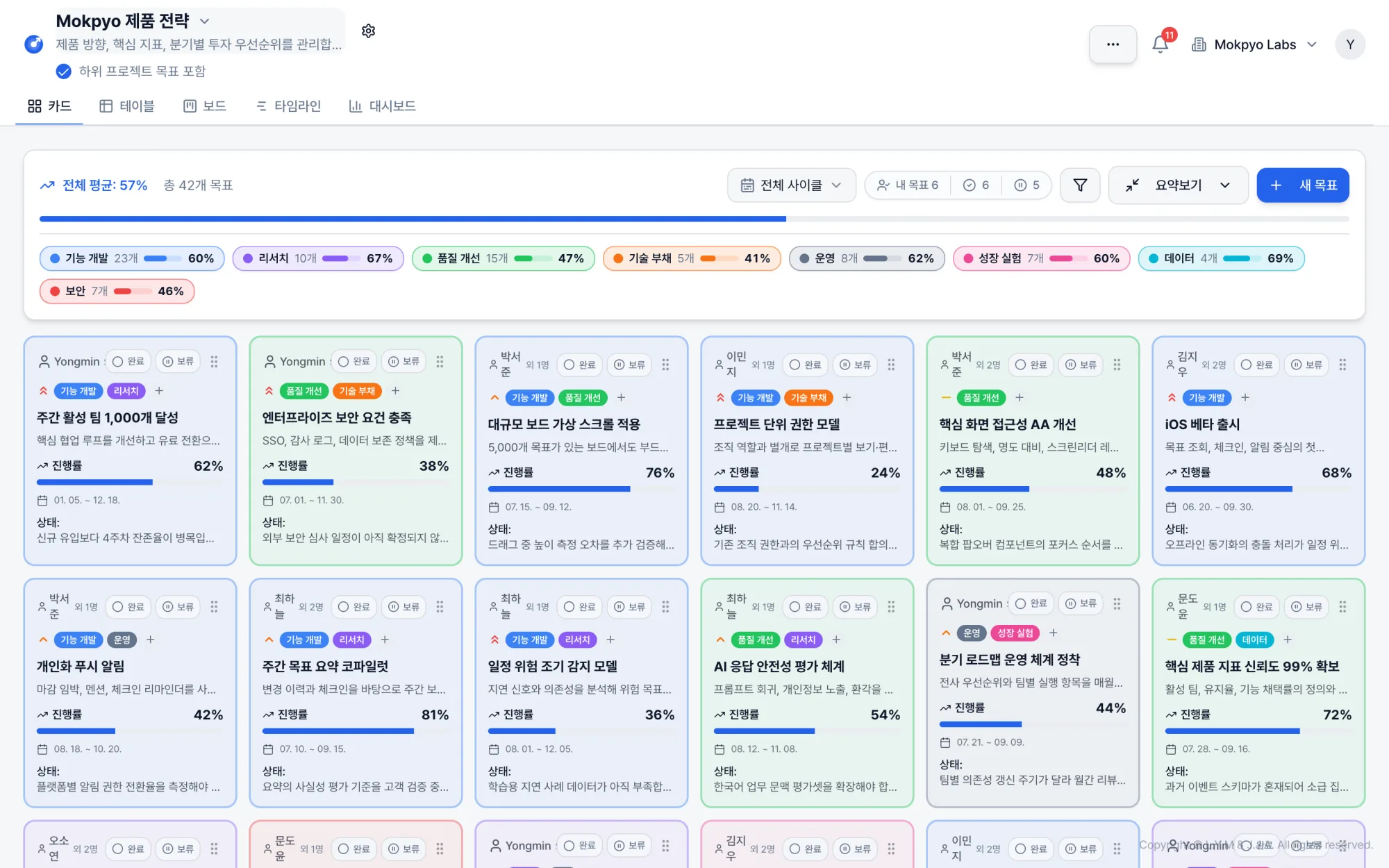
Mokpyo card view: 42 goals with an overall average of 57%, displayed as cards with category progress chips
Cards — 42 goals, including sub-projects, with category, owner, progress and dates. Average progress by category appears across the top.
Type
Self-hosted, open-source team goals and OKRsWorkspace → Project hierarchy → Goal → Sub-goal · Owner, administrator and member permissions · Join through invitation links
Five views
Card · Table · Board · Timeline · DashboardPer-owner status · Change history · Saved filters · Custom fields for your team
Automation
Sub-goal progress rolls up to parent goals · Automation rules (6 triggers × 6 actions) · Mention and deadline notificationsQuarterly cycles · Check-ins · Comments and @mentions · Attachments · Audit log
AI and MCP
Shared AI reports or a connection to your existing AI toolFor shared reports, an administrator configures the AI provider, model and API key. Your own AI tool can read goals and records through MCP and write reports without an LLM API key on the Mokpyo server.
WHY

Plenty of tasks, but shared goals were harder to see

In a team of around 40 people, Jira and spreadsheets tracked the work. It was still hard to see the week’s shared focus, how tasks connected to goals, and how those goals were progressing. Mokpyo was built and used to address that need.

HOW

The structure came before the screens

Data isolation by organization, permissions and invitations, a record of who changed what and when, and automation that executes rules: the foundations of a team tool were designed before the interface was built on top.

SO WHAT

Install and adapt it for your team

You can install and modify the public source yourself. For deployment, integration or custom features suited to your organization, ALEXSOFT offers separately scoped paid consulting and development.

ALEXSOFT Bridge — EMR and LIS data in Korean standard formats, with a reason for every unconverted record

Bridge converts data from hospital and clinic EMR and LIS (laboratory information systems) to Korea’s KR Core 2.0.0 format. KR Core is a set of rules published by HL7 Korea and based on HL7® FHIR®. Conversion encounters unapproved test codes, values with incompatible units and results referring to patients absent from the source. Silently skipping them leaves recipients unable to tell what is missing. Bridge reports a reason for every unconverted record.
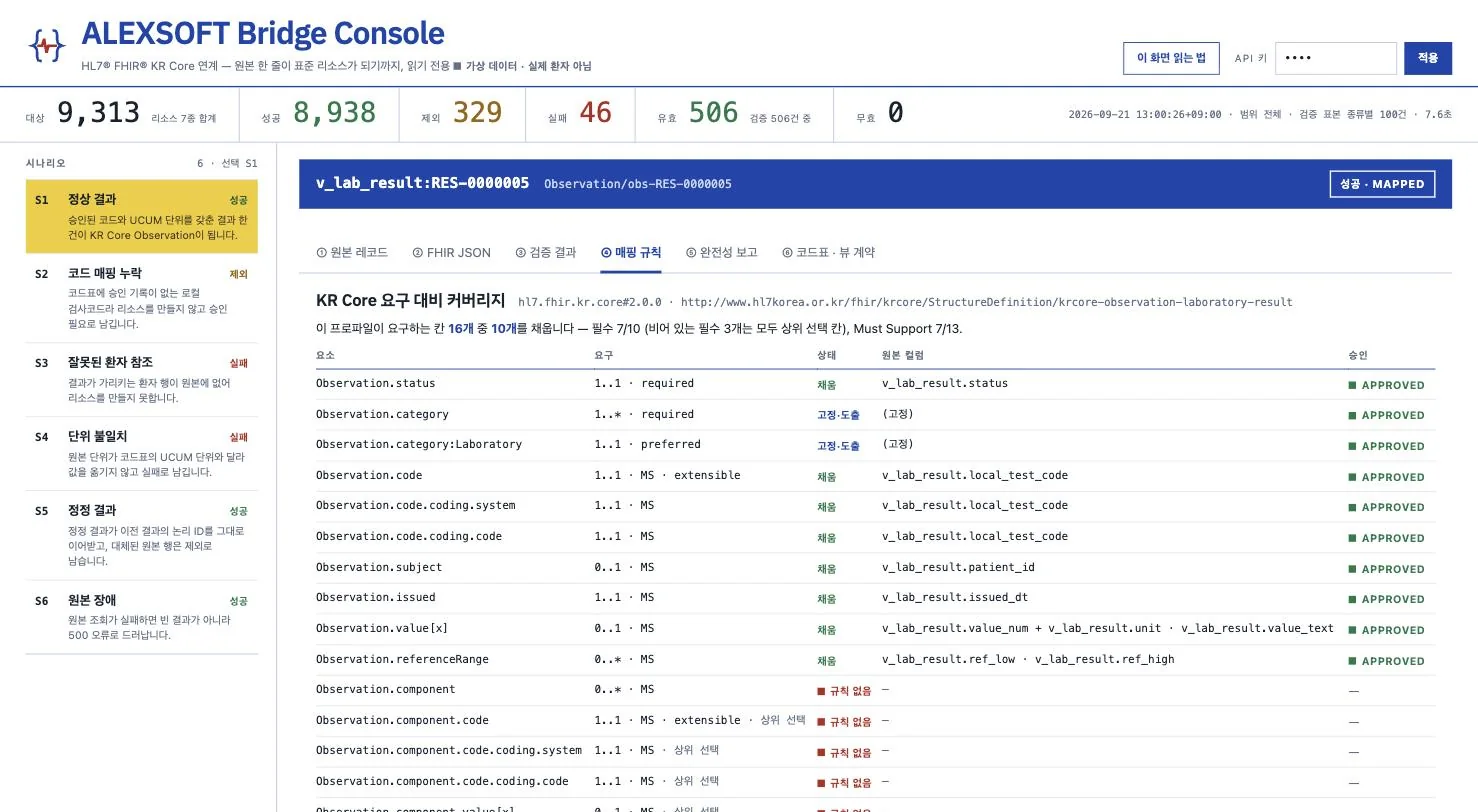
ALEXSOFT Bridge console, Mapping rules tab: totals of 9,313 in scope, 8,938 converted, 329 excluded, 46 failed, 506 valid and 0 invalid; six scenarios on the left; and a table of required KR Core elements, source columns and approval status on the right
Console — Mapping rules tab. Each required KR Core element shows whether it is populated and which source column supplied it. The totals are 9,313 in scope = 8,938 converted + 329 excluded + 46 failed. “506 valid” reflects validation of a sample selected by resource type when the console starts; full validation runs separately. Synthetic data is shown.
Type
HL7® FHIR® KR Core interoperabilitySource data is read only and never modified
Account for every record
In scope = converted + excluded + failed · 0 records disappear without a reason9,313 synthetic source records, including 4,906 test results = 8,938 converted + 329 excluded + 46 failed · Processing stops without producing a report if the totals do not reconcile
Reasons for non-conversion
Excluded records are deliberately not generated under the rules; failed records cannot be generated because of source-data problemsExcluded: codes awaiting approval, orders without results, old results superseded by corrections · Failed: incompatible or missing units, duplicate results, missing issue times, references to absent patients · Download the records and their reasons as CSV
Rule validation
Automatically validated against the KR Core 2.0.0 rules published by HL7 Korea0 ERRORs across all 8,938 resources generated from synthetic source data · Validated with the HAPI FHIR validator
Hospital source EMR · LIS, read only Convert to standard Rules · Codes · Units Validate rules KR Core 2.0.0 Reconcile totals Total = converted + excluded + failed Access Query API · Console Unconverted records are listed with reasons

← Scroll sideways to see the full process →

WHY

Hospitals record the same information differently

One hospital may label a test RBC while another writes out “red blood cell count”; unit notation also varies. People can recognize the meaning, but systems cannot. A common format such as KR Core makes data from different hospitals readable in the same structure.

HOW

Keep every unconverted record with its reason

Records intentionally not generated under the rules, such as unapproved test codes, are excluded. Incompatible units or references to absent patients are failures. Every run checks that in scope = converted + excluded + failed, then automatically validates the converted output against KR Core rules.

SO WHAT

Start with one source and one area

We agree together which source to use and how much to convert. The same report shows what was converted and what remains, with the reason for each remaining record.

“Of 9,313 records, 8,938 were converted. The remaining 375 could not be converted for these reasons.” That is what completion needs to explain.

Results from synthetic source data · 0 records disappear without a reason

HL7®, and FHIR® are the registered trademarks of Health Level Seven International and their use of these trademarks does not constitute an endorsement by HL7.

Busan & Geoje in View
Terrain, statistics and archives on a map

A non-profit toy project bringing the terrain of Busan and Geoje, scattered public statistics and photographs together in one place to explore. Both services are in Korean.

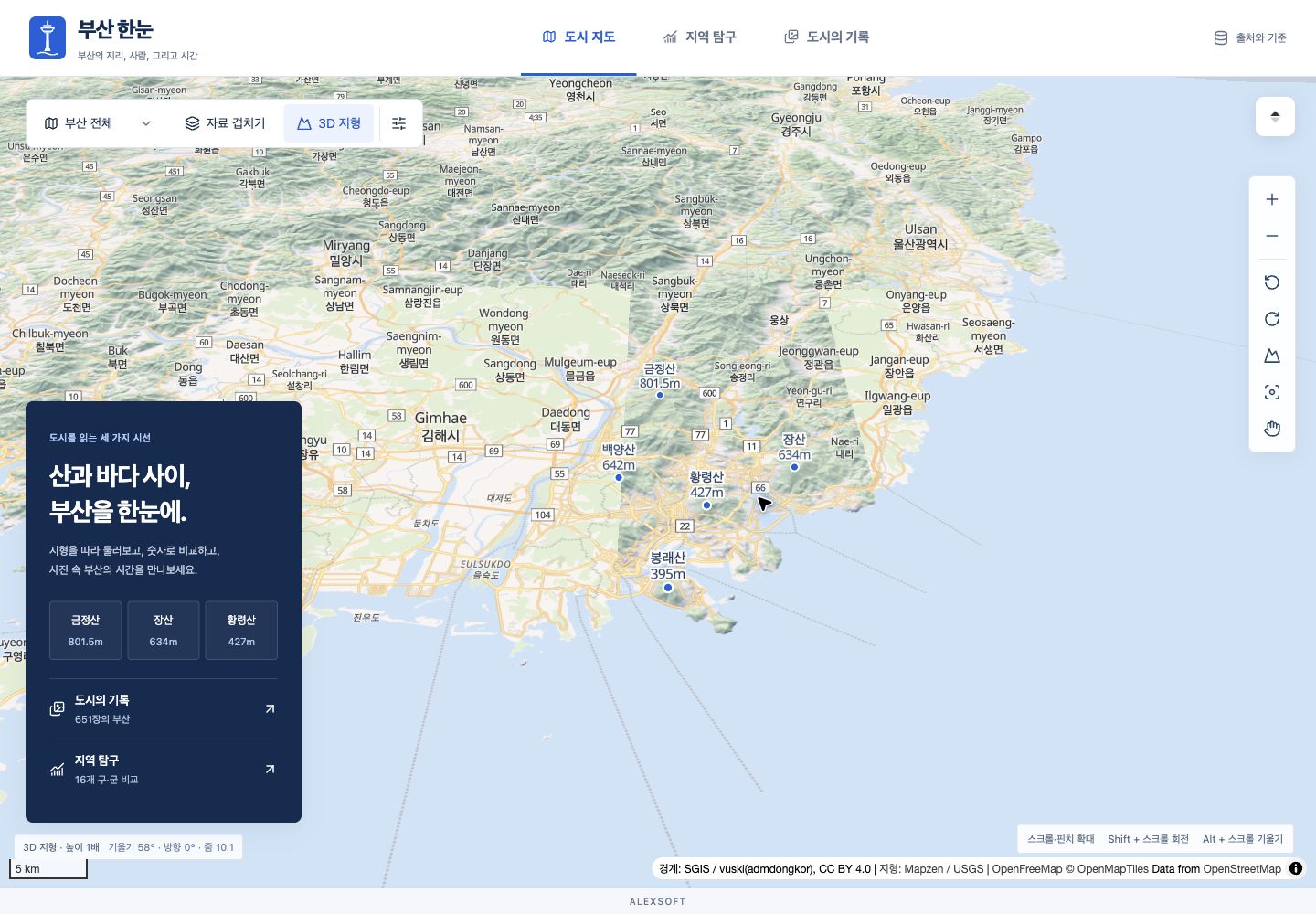
Busan in View

An actual Busan in View 3D map showing mountain and coastal terrain and map controls
A map of Busan showing mountains, the sea and everyday facilities together.

Explore statistics for 16 districts and counties and 651 archive photographs. Two indicators can be compared only when their reference periods match. Photographs without known dates are labeled “Date unknown.”
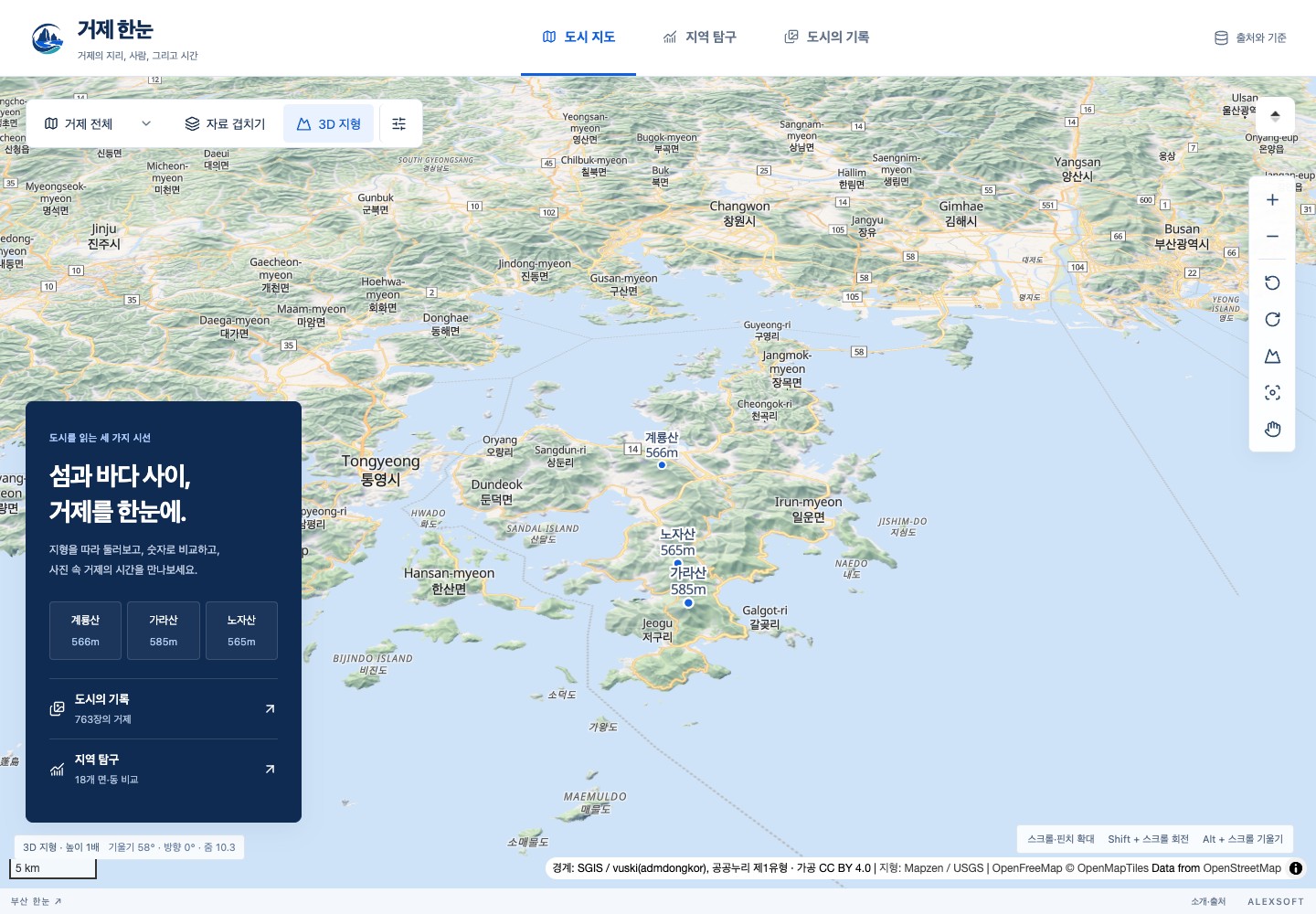
Geoje in View

An actual Geoje in View 3D map showing Geoje Island, surrounding islands, mountains and coastal terrain
A map of Geoje showing islands, the coast and everyday facilities together.

Explore statistics for 18 local districts, 763 archive photographs and 24 actual satellite images from 1984–2025. Employment income, commercial-area and long-term-care data retain their published geographic coverage and reference periods.

Data standards
Every figure and photograph includes its source, reference date and usage terms. Unknown dates and locations are left unknown. Statistics subject to disclosure restrictions are described only within the published scope.
Implementation
React · MapLibre 3D maps · Charts. Runs as static files without its own server or database, in desktop and mobile browsers.

From exploring the center to arranging a visit

A brand website for THE GRACE Senior Day Care in Haeundae, Busan. We organized center information, programs and visitor guidance, and presented real facility photographs in a magazine layout, including the Sarang (Love) and Haengbok (Happiness) classrooms. On mobile, key menus, phone consultation and directions are easy to reach.

THE GRACE Senior Day Care homepage with center information, programs and consultation links
Latest update preview · 10 Nov 2026 · Korean website
Type
Brand Websites
Scope
Information architecture · Responsive screens · Real facility photos · Contact paths
Search & sharing
Page metadata · Structured data · Sitemap updates
Status
In operation
Other fields

The same standards apply in shipbuilding and marine core systems.

Work in shipbuilding and marine engineering involved systems carrying design, production and operational data across multiple core systems. The central task was to make system boundaries, responsibilities and data flows clear while keeping existing operations running.

Getting started

Your system can be designed and built in the same order.

Reconstructing legacy impact from source code. Bringing scattered workflows onto shared data. A 20-minute call establishes whether the work is a good fit.

Discuss architecture and development →