e-Invoicing brings invoice issuance and sales reporting into one framework.
In Korea, electronic tax-invoice issuance and tax-authority reporting through VANs are separate flows. In several countries, they operate within one electronic document exchange and reporting framework. This page explains that structure and what ALEXSOFT founder Yongmin Lee addressed while designing it at national scale.
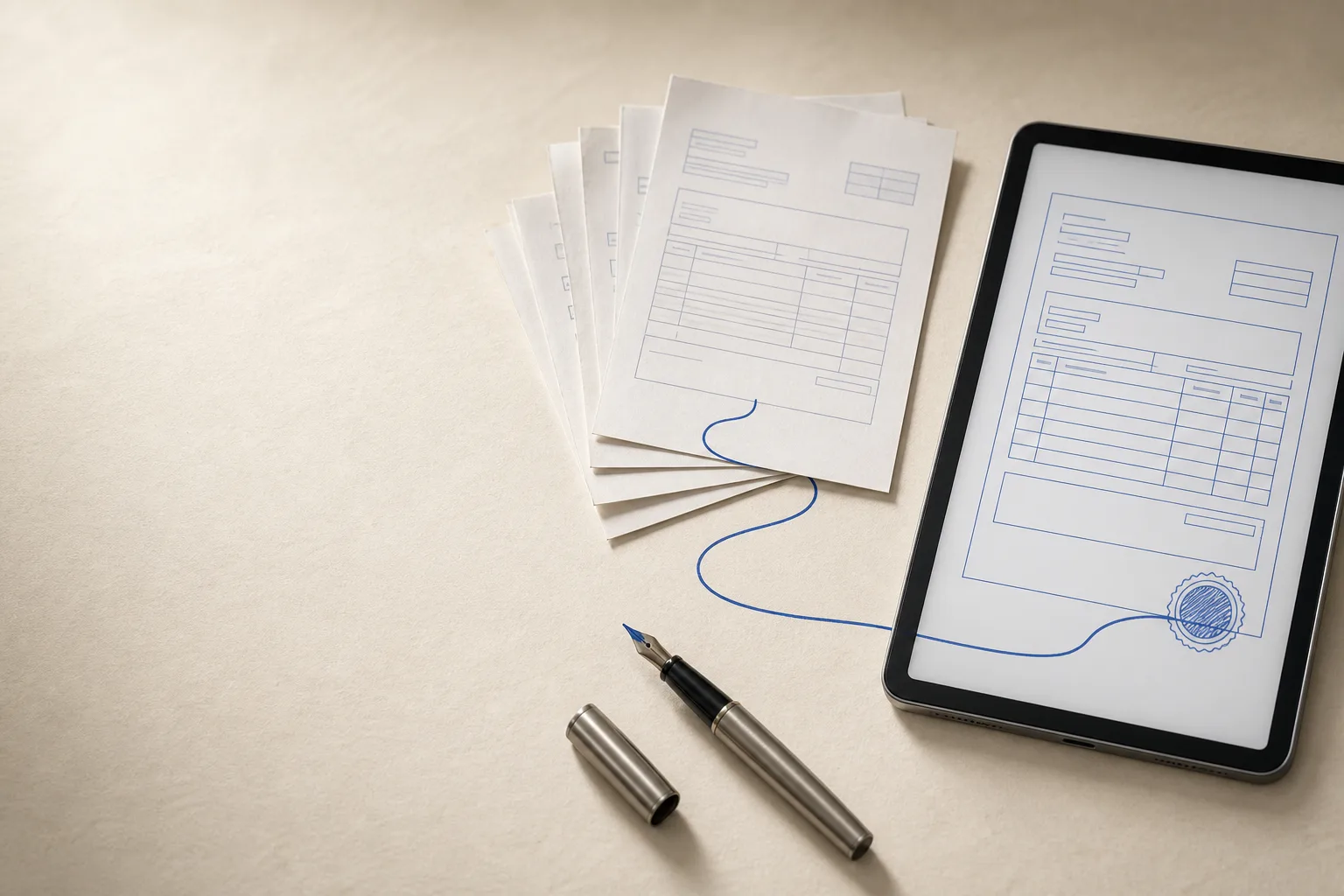
- DOCUMENT
- Document schemas and validation rules
- EXCHANGE
- ERP, transmission-provider and tax-authority integration
- OPERATIONS
- Errors, retransmission and audit trails
What Korea calls electronic tax invoicing is known internationally as e-invoicing.
In Korea, electronic tax-invoice issuance and transmission and VAN-based sales-data reporting to the National Tax Service have generally been treated as separate tasks. In several countries, e-invoicing handles document exchange and sales reporting within one set of specifications and transmission architecture.
Electronic tax invoices
Parties to a transaction issue structured tax invoices and transmit them to recipients and tax authorities.
VAN tax-authority reporting
Payment and sales data are collected and reported in the structure required by the National Tax Service.
Document exchange and reporting
One system standardizes invoice, transaction and payment data for validation, transmission, reporting and tracing.
This is why the Philippine system is officially called the Electronic Invoicing and Sales Reporting System. It handles both the exchange of electronic invoices and the sales-data reporting required by the tax authority.
WHY “ELECTRONIC INVOICING AND SALES REPORTING SYSTEM”
From document standards to government handover.
ALEXSOFT founder Yongmin Lee participated as development PL from 2020 to 2022 in the Philippine Bureau of Internal Revenue e-invoice system project (KOICA, 2018–2022). He designed the development architecture, e-invoice document standards and document-exchange security standards, and led development. The system went live in 2022 and remains in operation.
← Scroll sideways to see the full architecture →
Document specifications for many participants
The documents must carry the same meaning across businesses and systems, beyond the internal format of any one organization.
Exchange security and traceability
Authentication, integrity, transmission status and audit history must remain connected throughout the operational flow.
Operational handover after delivery
We design for the organization that will take over the standards and code, as well as incident response and change management.
Distinguishing the projects
- Initial build
- 2018–2022Founder Yongmin Lee participated as development PL in 2020–2022
- Second-phase support
- 2025–2026Carried out by a separate provider; not part of ALEXSOFT's track record
Two common questions.
How does e-invoicing differ from Korean electronic tax invoices?
In Korea, issuing and transmitting tax invoices and sending sales data to the National Tax Service through VANs have generally been treated as separate flows. In several countries, e-invoicing brings these together in one electronic document exchange and reporting framework.
What does the Philippine BIR EIS experience contribute?
It is experience designing document standards for many businesses, exchange security and operational handover together at national scale. Founder Yongmin Lee participated as development PL in 2020–2022 during the initial 2018–2022 project. This is separate from the 2025–2026 second-phase follow-up support carried out by another provider.
We apply this experience to architectural decisions. We do not offer country-specific compliance packages.
This experience informs the design of systems where many businesses must exchange documents with consistent meaning, and where regulation and audit requirements directly shape the architecture. We can discuss your needs in an architecture design and development consultation.